

PSCs
- Efficiency: 22% @ AM0, 25°C
- Size: 50 mm × 50 mm
- Temperature: −100°C to 100°C
- Current collection: Kovar

Perovskite program
Explore rigid, tandem and flexible products, published mission records, and the scope of flexible-module certification.
Products
Explore rigid, tandem and flexible perovskite cells. Products are supplied through an associated company; contact us for availability and contracting details.


Certification
Flexible perovskite modules developed by associated company Jiangyin Jinghao New Energy Technology Co., Ltd. passed the highest-grade tests under IEC TS 63163:2021 for mobile, portable and attached applications, announced at SNEC 2026.
IEC TS 63163 is the first international specification for photovoltaic modules in consumer products, covering mechanical durability, environmental adaptability and electrical safety. These certificates cover the specified flexible modules for consumer-product applications. They do not replace radiation, vacuum or mission-specific space qualification.
Heritage


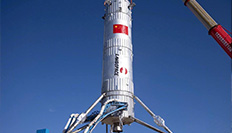

Perovskite cells on JT-1 03 operated in orbit for more than a year. In May 2026, Fuxi Energy reported a longest on-orbit demonstration of 15 months.